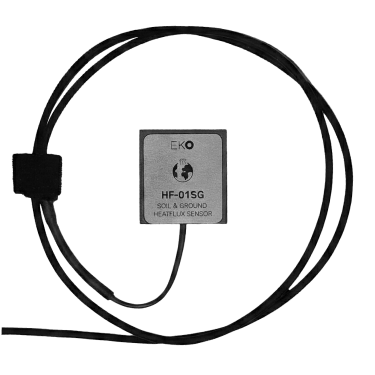
Precisely measure soil and ground heat flux with the EKO HF‑01SG sensor. Waterproof, rugged, ISO 9869 compliant, and ideal for ground in-situ thermal conductivity analysis and soil and ground heat balance.
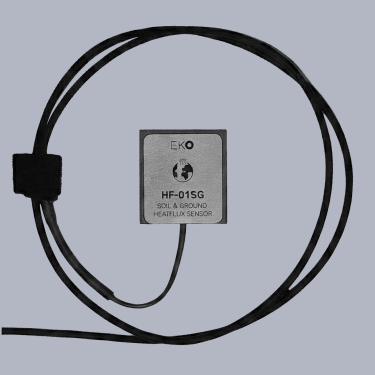
Meet the robust, precision-engineered HF-01SG Soil and Ground Heat Flux Sensor. As the sister of the HF-01S, this sensor helps you carry out soil and ground heat flux measurements with ease and accuracy under real-world conditions. EKO brings over 50 years of heat flux sensor manufacturing experience to this design. We developed the HF-01SG to meet the demanding requirements of environmental research, geotechnical analysis, and surface energy balance studies.
The rugged, sensitive, fast-response, weather-proof sensor allows you to measure soil and ground heat flux as precisely as possible. Its minimal form factor and thin body minimize the sensor’s disturbance on the actual heat flow. This design makes installation easy without disturbing the soil environment. The limited surface area also minimizes the chance of water blockage during soil irrigation. We manufacture every sensor carefully in Japan and pass it through critical quality tests to ensure it lasts.
Why Choose the HF-01SG?
Just like the HF-01S, the HF-01SG follows the ISO 9869 standard. It benefits from a unique combination of size and sensitivity. Despite the inverse correlation between these two characteristics, the HF-01SG offers the best of both: small size and high sensitivity.
When installing the sensor, you can witness the importance of the thin and compact body as you easily push it through the soil. Our location tag, for the first time, allows you to know where your sensors are buried. This ensures the protection of cables and sensors against unintentional damage during uninstallation.
Its low thermal resistance ensures minimal disturbance to the natural heat flow in soil. Additionally, its rugged enclosure guarantees stability in varying weather and environmental conditions. When you install this sensor according to best practices, it becomes a key component in evaluating thermal conductivity, ground heat capacity, and overall energy exchange at the surface level.
Applications
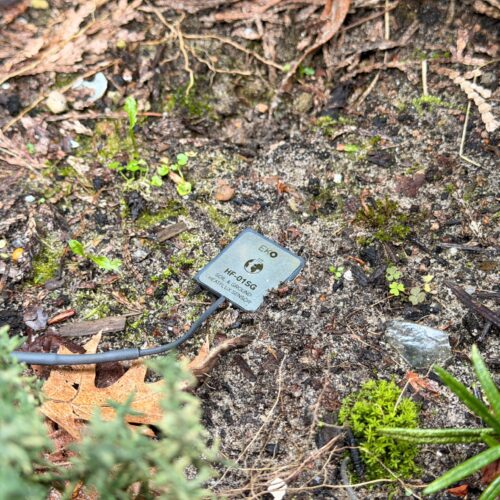
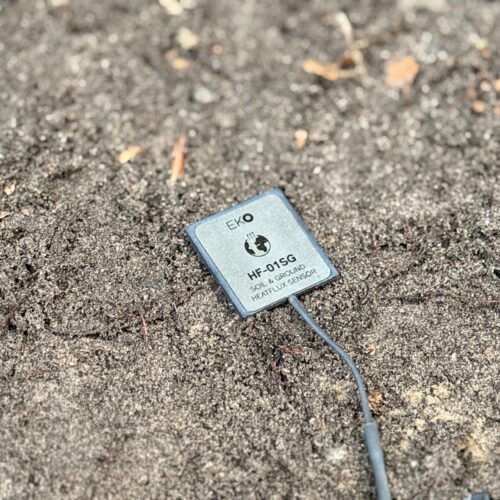
Thanks to the specifications, flat construction, and water-resistant design, you can bury it at specific soil depths. You can also place it directly on surface layers for monitoring diurnal heat cycles, solar absorption, and insulation behavior of ground coverings. The plate is suitable for integration into energy balance models and thermal conductivity assessments. It also works well alongside building performance assessments.
Designed to withstand harsh soil and ground environments, the HF-01SG supports a wide range of scientific and practical applications including:
Soil and ground heat flux monitoring for energy balance
Soil temperature and thermal behavior studies
Agriculture and Horticulture energy analysis
Geothermal heating thermal analysis
Construction foundation thermal testing
Renewable energy (Bifacial PV, Ground heat pumps, Green Roofs, and so on)
Pair your HF-01SG with our temperature sensors above and below the plate to enable thermal profiling. When used together, this setup allows for in-situ thermal conductivity calculation using Fourier’s Law. This enables meaningful estimation of ground heat storage and heat transfer behavior. Check out a few application examples in the Application Sheet in the download section.
Installation
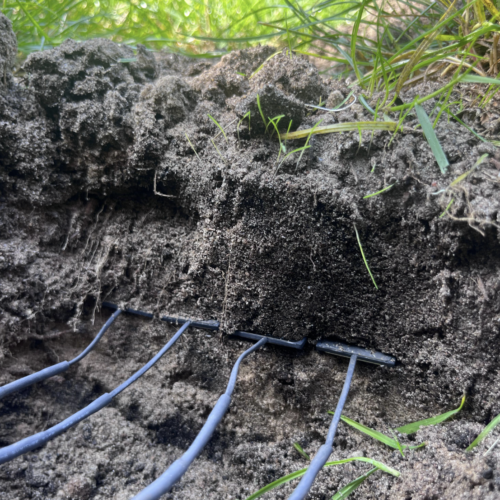
Installation is easy and straightforward but you must perform it carefully to ensure proper soil contact and reliable data. Poor installation can lead to data that does not represent actual conditions. Read the Quick Start Guide and Instruction Manual to learn how your sensor should look once installed.
Calibration
At EKO, we calibrate all heat flux sensors carefully according to the ASTM C1130 Standard. We use a Heat Flow Meter Apparatus in compliance with ASTM C518 and ISO 8301. Check your sensor’s calibration certificate for detailed calibration conditions.
Enhance Your HF-01S
Upgrade your HF-01S with our Cable Extension Packages and Handheld Datalogger. For seamless monitoring, explore our Thermal Monitoring Kits QHT-10 equipped with the HF-01S/HF-01SG and the highest accuracy temperature sensors.
We use cookies to ensure that we give you the best experience on our website. If you continue to use this site we will assume that you are happy with it.



 How it works