


Added to list
There are no items on the list.
 How it works
This page will guide you through everything about pyranometers, including the working principle of the thermopile sensor, a detailed explanation of the ISO classification standards, key factors for selecting the right pyranometer for your application, and essential tips for installation and maintenance to ensure long-term, accurate data for your photovoltaic (PV) performance monitoring and research needs.
Scroll down and learn more about our Pyranometers.
ISO 9060:2018 compliant. Industry-leading response time and temperature stability.
Integrated heater ensures accurate data in snow, frost, rain, or humidity.
No moving parts. No re-leveling. Long-term stability with low operating costs.
Low-power smart interface with Modbus and analog outputs — easy to integrate.
Delivers highly stable, low-noise irradiance data with minimal deviation.
A pyranometer is a scientific radiometric sensor engineered to measure global solar irradiance—the total shortwave solar radiation received from the entire hemisphere above a horizontal surface. This includes both direct solar radiation and diffuse sky radiation, integrated over a 180° field of view.
A pyranometer is used extensively in solar resource assessment, climate research, and PV system performance monitoring. A pyranometer is used to measure irradiance data in watts per square meter (W/m²), enabling precise energy yield forecasts and long-term environmental analysis.
Modern date pyranometers are built to meet international standards (such as ISO 9060 and WMO guidelines) and are designed to operate reliably under varying environmental conditions—from polar research stations to arid solar farms. High-end models feature integrated temperature compensation, low uncertainty calibration, and smart diagnostics to support automated and high-frequency data acquisition.
As solar technologies and climate modeling demand increasing accuracy, the pyranometer remains an essential tool bridging the gap between sunlight and actionable data.


A pyranometer works by translating the flow of solar radiation into a measurable electrical signal, enabling accurate quantification of solar energy at the Earth’s surface.
The usual key components of a pyranometer are optical domes, a blackened surface to absorb light, a thermopile sensor, and a protective pyranometer housing body with optional internal electronics for signal processing.
Pyranometer Working Principle: Thermoelectric Conversion
Thermoelectric conversion is the process of turning a temperature difference into an electrical signal. A pyranometer does this using the Seebeck effect, where two different conductive materials (joined in a thermocouple) produce a voltage when their junctions are at different temperatures.
Thermoelectric conversion in a pyranometer transforms solar energy into heat, and then into an accurate electrical signal that quantifies the amount of sunlight reaching the surface.

Pyranometer performance and reliability are defined by key ISO standards. ISO 9060:2018 sets the classification system, rating instruments by parameters such as accuracy, stability, and temperature response. ISO 9847:2023 provides calibration procedures, ensuring field pyranometers deliver traceable and comparable measurements. Together, these standards guarantee that solar irradiance data is accurate, consistent, and suited for applications from PV monitoring to climate research.
Before we go deeper into classes, let’s first know about “Spectrally Flat”
In ISO 9060:2018, the “spectrally flat” classification means a pyranometer or pyrheliometer maintains uniform sensitivity across the solar spectrum (350–1500 nm) with a spectral error below 3%. Unlike standard Class A/B/C instruments, spectrally flat sensors provide consistent accuracy under varying light conditions. They fully meet WMO and IEC 61724-1 requirements, making them ideal for precision applications such as plane-of-array, albedo, and reflected irradiance measurements. This ensures reliable calibration, continuity with earlier standards, and dependable performance in both clear and non-clear sky conditions—essential for advanced PV monitoring, meteorology, and scientific research.
ISO 9060:2018 Class | Key Use (Application) | Key Specifications |
Class A | High-accuracy PV system testing & Scientific studies | <15 sec response, ≤ ±0.5% non-linearity, <10 W/m² directional error, annual stability ±0.8% |
Class B | Quality field & network use | <30 sec response, ≤ ±1% non-linearity, <20 W/m² directional error, annual stability ±1.5% |
Class C | Routine/field use, basic applications | <60 sec response, ≤ ±3% non-linearity, <30 W/m² directional error, annual stability ±3% |
The shift from ISO 9060:1990 to ISO 9060:2018 introduced major updates to pyranometer classification. The new standard redefines spectral performance using “spectral error” instead of spectral selectivity, adds a “spectrally flat” sub-class (<3% error) for higher accuracy, and formally includes silicon-photodiode sensors in Class C. It also strengthens testing and reporting, introduces guard bands to account for measurement uncertainty, and renames the classes (Class A, B, C). These changes make the standard more realistic, inclusive, and aligned with modern solar applications, ensuring more accurate and reliable irradiance measurements under real-world conditions.
Learn more about the differences between silicon x thermopile pyranometer here.
IEC 61724-1 is the international benchmark for monitoring the performance of photovoltaic (PV) systems. It defines how solar power plants should be measured, what data should be collected, and the level of accuracy required, ensuring that performance assessments are consistent and comparable worldwide.
The standard introduces monitoring system classes that align with system size and complexity. Smaller PV systems may require only basic measurements, while utility-scale or high-value installations demand Class A accuracy with advanced sensors and more detailed reporting.
Key measurements outlined in IEC 61724-1 include solar irradiance, module and ambient temperature, voltage, current, power output, and environmental conditions such as wind and humidity. By relying on high-quality instruments—particularly pyranometers for irradiance measurement—operators can detect faults, confirm warranty claims, and validate whether energy production matches design expectations.
The standard also emphasizes sensor calibration, data accuracy, and robust data management practices, including sampling intervals, timestamping, and reporting protocols. This ensures that monitoring systems produce not just data, but reliable insights into plant performance.
In practice, IEC 61724-1 helps owners, operators, and researchers move beyond basic energy yield reporting to a deeper understanding of system behavior. By following these guidelines, PV systems can be optimized for efficiency, maintained proactively, and benchmarked across different sites and technologies, ultimately supporting more reliable solar energy generation.
When evaluating solar projects for financing, investors and banks rely on performance data that complies with international standards. IEC 61724-1 defines how photovoltaic systems should be monitored, and it specifies Class A pyranometers as the reference for the highest accuracy in irradiance measurements. Using a lower-class sensor introduces uncertainty that can affect yield estimates and financial models, creating risk in long-term investment decisions. A Class A pyranometer minimizes this risk by providing high-quality data that meets the most rigorous standard requirements, ensuring that project performance evaluations are both reliable and bankable.
How Class A Pyranometers Improve PV Performance Ratio
The performance ratio (PR) quantifies a PV system’s operational efficiency, but accurate PR calculation depends on quality and accurate irradiance measurements. Class A pyranometers, compliant with IEC 61724-1, provide high spectral responsivity, low thermal offset, and fast response time, capturing both direct and diffuse irradiance at the module plane. By delivering trustworthy, high-resolution data, they allow operators to isolate system losses, such as inverter clipping, soiling, or temperature derating, from natural solar variability. This enables precise energy yield assessment, early fault detection, and optimization of O&M strategies, ensuring the PR reflects the true performance of the system rather than measurement uncertainty.
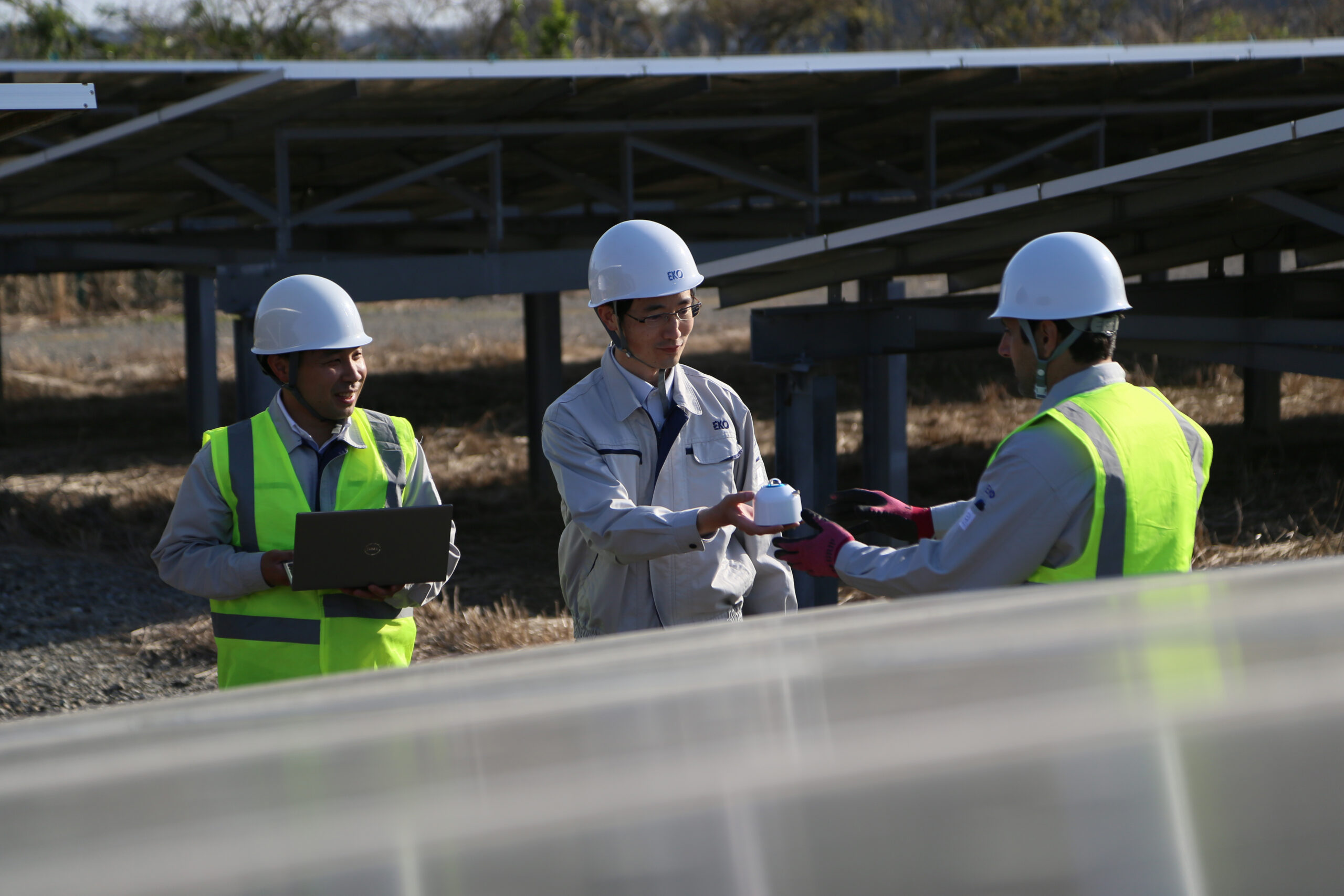
A pyranometer is used to measure solar irradiance on a horizontal or tilted surface. It captures both direct sunlight and diffuse sky radiation, providing a complete measurement of the total solar energy. Pyranometers are essential for large-scale utility PV system performance monitoring, helping calculate accurate energy yields and performance ratios. It is used for bankable projects, where investors require traceable and IEC-compliant irradiance data. A pyranometer is used for Solar resource assessment, enabling system design, site evaluation, and optimization of operation and maintenance strategies.
A pyranometer measures global irradiance, capturing both direct sunlight and diffuse sky radiation, while a pyrheliometer measures only the direct irradiance from the sun using a solar tracker. Together, they provide a complete picture of the solar resource. Pyranometers guide PV performance monitoring and bankable yield assessments, while pyrheliometers support solar resource evaluation and optimization of systems like concentrating solar power. Using both instruments allows operators and developers to accurately separate diffuse and direct contributions, improving performance analysis, system design, and long-term reliability.
A pyranometer and a reference cell both measure irradiance, but only a pyranometer delivers the bankable data required for financing. Investors and lenders expect measurements that are clear, standardized, and compliant with IEC 61724-1, ensuring that performance assessments can be presented to audits and pass the due diligence. Reference cells, while useful for tracking how modules behave in real time, are not accepted as proof of system performance in financial models. In contrast, Class A pyranometers provide the universality, compliance, and credibility needed to protect long-term investments, making them the cornerstone of any trustworthy and bankable monitoring setup.
The answer is simple, logical, and straightforward; ground reality and data matter.
Satellite-derived solar data offers broad coverage and historical datasets that help developers understand long-term resource potential. But when it comes to operating and optimizing a solar plant, satellite data alone falls short.
The limitation lies in resolution and context. Satellites measure irradiance from space and apply models to estimate conditions on the ground. These estimates cannot capture at ground conditions such as soiling, shading, horizon obstructions, cloud dynamics, or microclimatic changes that directly influence PV performance. As a result, satellite data often provides a smoothed, averaged view that masks the variability seen at the module level.
Pyranometers, on the other hand, provide ground truth measurements. Installed directly at the PV site and aligned with the modules, they record the real irradiance conditions experienced by the system. This data allows operators to accurately calculate performance ratios, detect underperformance quickly, and make informed operational decisions that satellite data alone could never reveal.
In practice, satellite data is valuable and good to have for planning, but pyranometer data is essential and crucial for operation. When bankability and system optimization are at stake, only pyranometer measurements deliver the accuracy and transparency required to protect long-term investments.
Calibration is the process of verifying an instrument’s readings against a known standard to ensure accuracy. For pyranometers, calibration is critical because even small measurement errors can significantly impact PV performance assessment, energy yield calculations, and performance ratio (PR) evaluation. Over time, factors like sensor aging, temperature fluctuations, and environmental exposure can cause differences in readings.
Regular pyranometer calibration guarantees quality, IEC-compliant, and verifiable data, allowing operators to distinguish real system losses from measurement uncertainty. Accurate, calibrated measurements not only optimize maintenance and O&M decisions but also provide bankable data that investors and financial institutions can trust for due diligence and long-term project reliability.
Read the article from our director, Kees Hoogendijk in PES magazine here.
The number of pyranometers in a Solar PV Project depends on the size, layout, and homogeneity of the site and the standards and guidelines. To get customized solutions for your project, get in touch with our team at https://eko-instruments.com/contact-us/
The cost of a pyranometer depends on its class, accuracy, spectral range, and compliance standards. To know which class of pyranometer will suit your needs, get in touch with our team at https://eko-instruments.com/contact-us/
Correct installation ensures reliable performance ratio calculations, fault detection, and bankable data. For a step-by-step visual diagram showing pyranometer installation, please check https://eko-instruments.com/product/pyranometer-ms-80sh-with-heater/


 How it works