Heat Flux Sensor: The Standard for Thermal Analysis
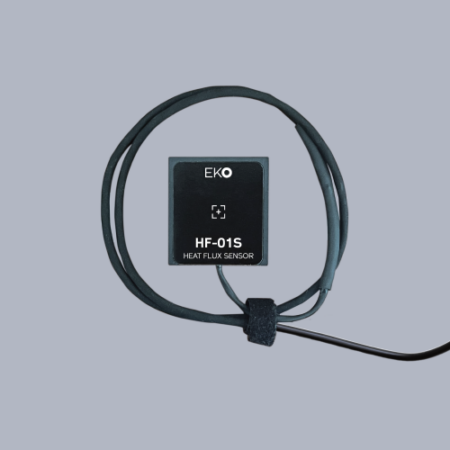
EKO’s Heat Flux Sensors accurately measure thermal energy flow for critical applications like Building Physics (ISO 9869 compliance) and R&D . The core HF-01S sensor is small highly sensitive, and features low thermal resistance to minimize interference, ensuring reliable data for evaluating insulation performance and heat transfer rates.
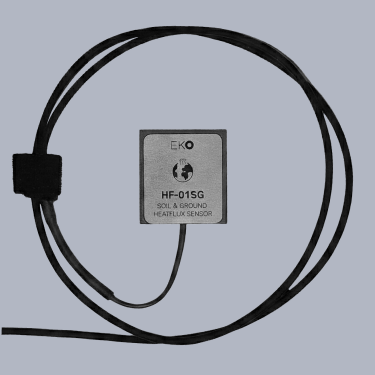
Precisely measure soil and ground heat flux with the EKO HF‑01SG sensor. Waterproof, rugged, ISO 9869 compliant, and ideal for ground in-situ thermal conductivity analysis and soil and ground heat balance.
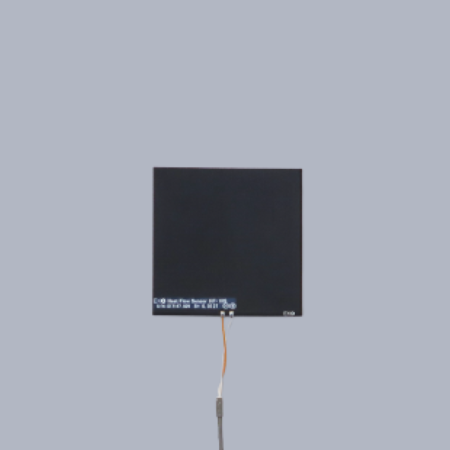
Small size standard plate type heat flux sensor | ASTM C1046 | ISO 9869 | Built-in thermal guard
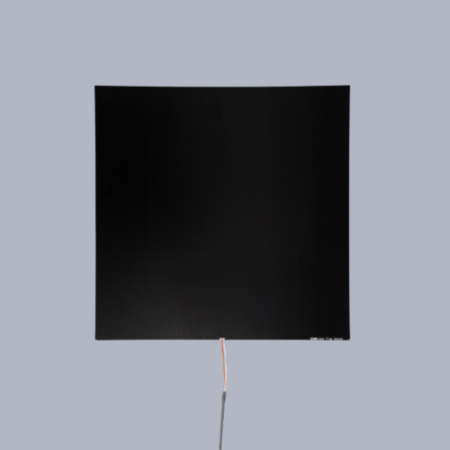
The HF-10S, at only 0.5mm thick, is a super-thin option for applications where the sensor’s thermal resistance must be minimal, ideal for a variety of research applications and manufacturing control processes.
Extend heat flux sensor cable with EKO Extension package to measure heat flux with high accuracy and precision on 20 meters away. Low resistance and high quality cables.
They are used in building physics, glazing monitoring, insulation testing, energy efficiency studies, Solar panel monitoring, material testing, biomedical research, and industrial process monitoring. See few application examples in downloads section.
Ranges highly depend on the application, but most sensors can measure from a few W/m² up to ten kW/m². In buildings for instance, walls transfer in the range of around 1-10 W/m².
Each sensor goes through calibration process and is calibrated against a reference standard to ensure reliable measurements. At EKO, we follow ISO and ASTM standards for this purpose. The sensor comes with a calibration certificate, where calibration conditions and the test results are officially declared.
They are usually embedded in material or mounted directly onto the surface where heat transfer needs to be measured, using adhesives, thermal paste, for good thermal contact. See the Installation Video to learn the best practices.
HF-01S can operate within –30 °C to +100 °C. The sensor is waterproof IP67 and can be used outdoors. Please note that the cable has a different temperature condition. When attaching the sensor on +100 °C, please do not attach the cable to that surface.
The sensor provides a voltage (µV to mV range) proportional to heat flux level, which can be read by a data acquisition system. Divide the voltage by the sensitivity value provided on the senso’s tag or the calibration certificate to convert the voltage into heat flux (W/m²).
Added to list
There are no items on the list.
<
<
<
<
We use cookies to ensure that we give you the best experience on our website. If you continue to use this site we will assume that you are happy with it.



 How it works